Why Applying More Won’t Fix Your Job Search: The Real Cause of Silence
When your positioning reads at the wrong level, volume just repeats the same result
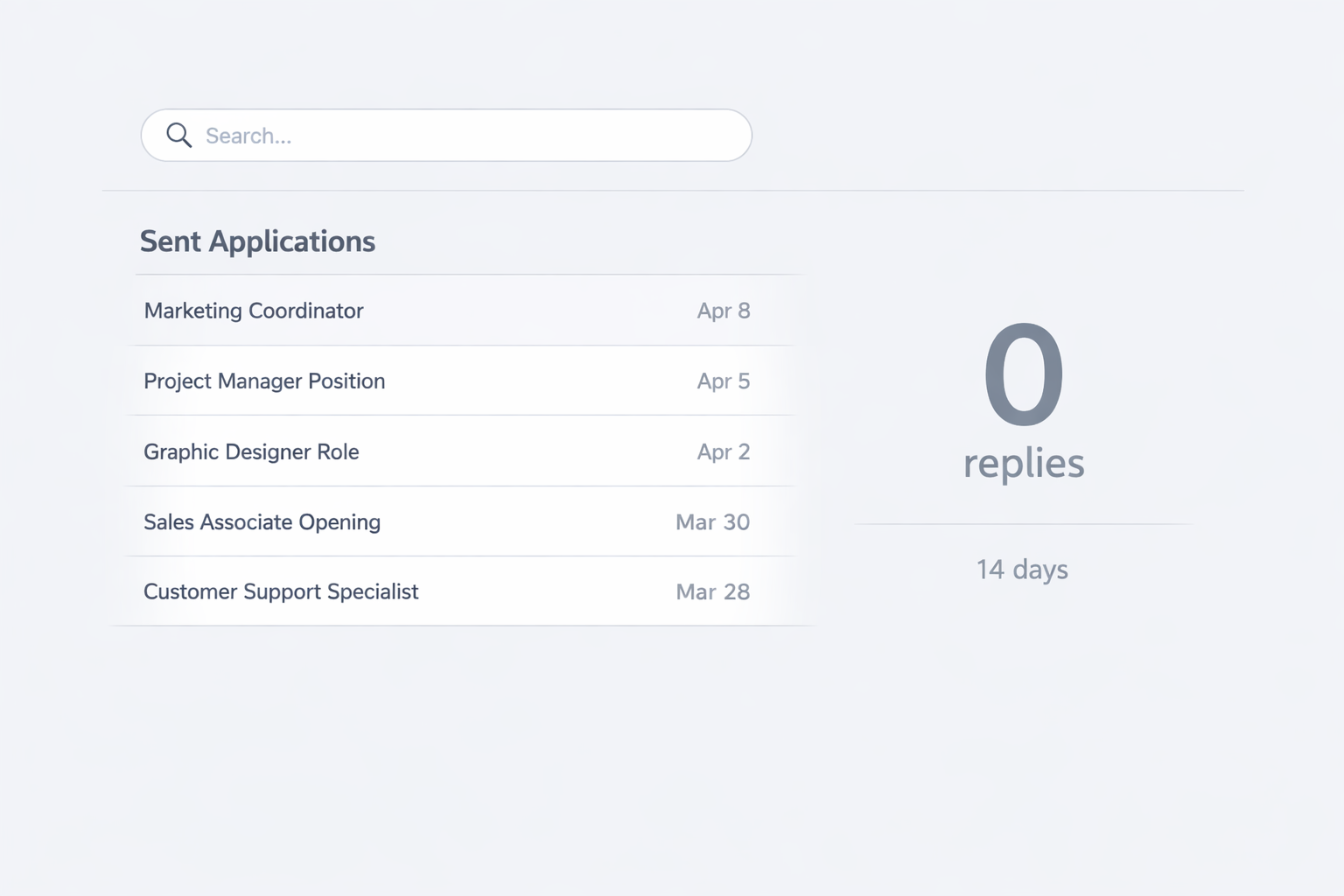
If you are experienced, credible, and qualified, silence feels personal, and it is hard not to take it as a verdict on your ability. You start wondering if you are missing something obvious, so you tweak your résumé, rewrite your LinkedIn headline, apply to more roles, add more keywords, and tell yourself that if you just push a bit harder, the right opportunity will land.
But still, silence.
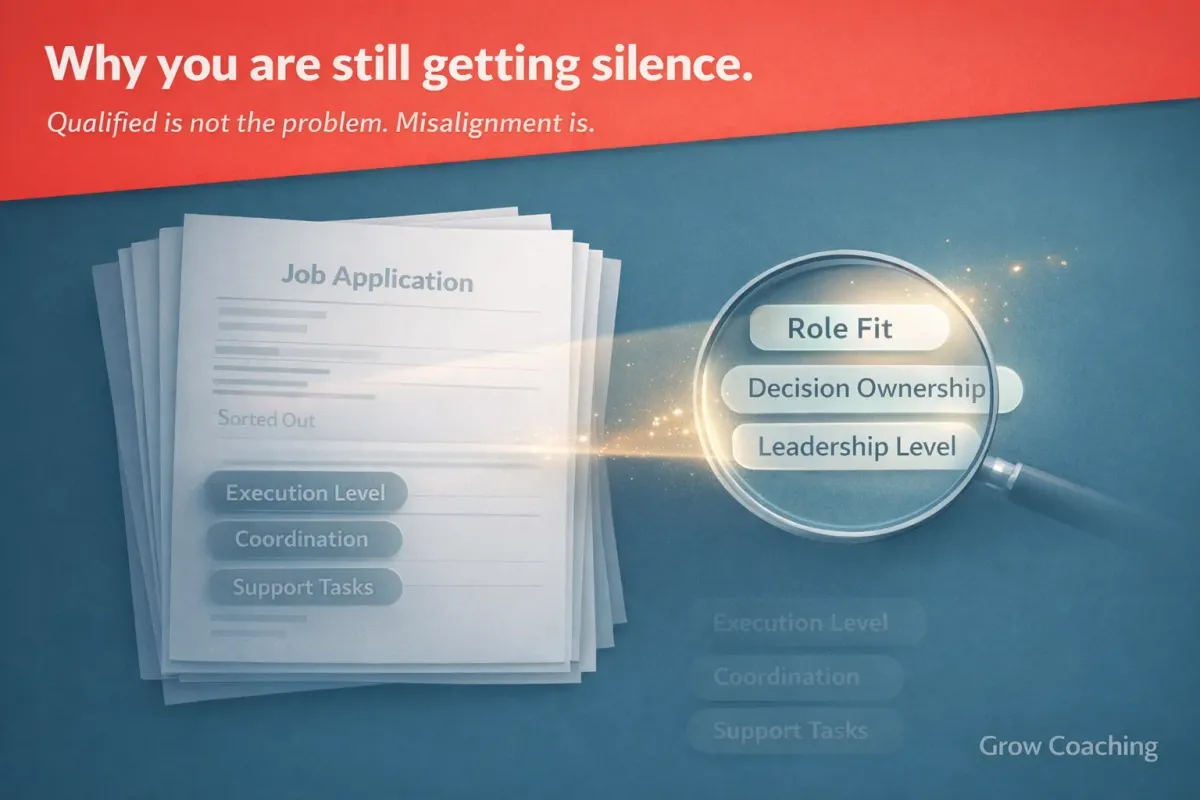
Here is the truth that most strong professionals resist at first. It is rarely a skill problem, it is rarely about formatting, and it is definitely not about gaming the system. It is usually positioning and structural alignment, which simply means the way your message describes you does not match the level the role is hiring for, or the story the market expects to see at that level, so you get placed in the wrong category before anyone really considers what you can do.
As a result, you get categorised incorrectly within seconds and filtered out because of misalignment before anyone evaluates your true capability.
This article is not a résumé checklist, it is a lens that will help you understand what is happening when you are not getting replies, even when you are qualified.
The volume trap
Most professionals respond to silence with volume.
They apply to more roles, widen the net and chase more job boards, and this just plays out the same story and simply pushes it harder.
They also start obsessing over formatting, rearranging sections, swapping templates, buying into ATS-compliant résumé narratives, stuffing in keywords, and trying to outsmart the applicant tracking system.

The issue is that volume does not solve misalignment; it amplifies it.
If your message is off, sending it to fifty roles instead of five does not improve your odds; it just repeats the same outcome at scale. The silence gets louder, your confidence takes a hit, and you start changing things that are easy to change, formatting, templates, and keywords, instead of fixing what is actually causing the filter.
That is how job search fatigue builds. People either give up or blame recruiters, AI, or the economy when the real issue is simpler. More effort is not the answer. Better alignment is.
AI is not the enemy, but it is a common reason strong professionals get quieter results. When AI writes your résumé or helps with applications without your real decision language and proof, it tends to produce the same polished, generic phrasing everyone else is using.
It also inflates duties into buzzwords, which makes you sound less specific, and it can pull your story away from the level you operate at. The result is a document that reads competent but not credible, and you get sorted out early because the hiring manager cannot see your judgment and ownership.
Operating level is the level of decisions you are trusted to make.
Misclassification happens in seconds
The reason why strategy comes before documents...

Hiring managers make a judgment fast, they scan for relevance and don’t read word for word on the first pass. They are placing you into a category and not analysing your potential.
If the way you present yourself reads at the wrong level, you get placed in the wrong bucket within seconds, and once that happens, you are rarely reconsidered, no matter how strong your background is.
That is why senior professionals get stuck.
They have done senior work, but their materials describe it like tasks.
It often looks like this:
Coordinated stakeholders
Managed timelines
Supported delivery
Produced reports
Led workshops
None of those lines are wrong. They are simply not senior signals. Senior signals are about decisions, trade-offs, risk ownership, and outcomes.
Here is the shift that matters.
Operating level is the level at which you make decisions.
Not your job title or your tenure, or years of experience. The level you operate at when it matters.
If you operate at a senior level but communicate like a delivery role, hiring managers cannot place you. So they filter you out to reduce risk and speed up sorting.
This is not unfairness, it's simple pattern matching.
If this is reading uncomfortably accurate, you are not alone. Most people do not need more applications, they need a clearer category and a stronger hiring story at the right level.
If you want support, there are two ways to work with me, depending on what you need right now.
Strategy comes before documents
Most people start with a résumé rewrite because it feels concrete. It feels like progress.
But the correct order is the opposite.
First, define your operating level
Be clear on the level you are actually operating at in your work, not the title you hold.Then define role alignment
Be clear on whether the roles you are targeting match that level, rather than applying based on title alone.Then define your hiring signal
Be clear on the simple message your résumé and LinkedIn are communicating about you at first glance.Then align résumé and LinkedIn
Once those three are clear, make sure your documents reflect them consistently.Then leverage network conversations
Use conversations to validate fit and improve how you are understood before you rely on applications.If you skip the first three steps
You end up polishing the wrong message and building a stronger version of the same misclassification.
This is why you can spend days rewriting and still get silence. The page reads well, but it reads like the wrong level.
What role alignment actually means
Role alignment is not about whether you can do the job, because let's face it, you probably can.
It is about whether your recent proof matches the role’s decision profile.
Every role has a decision profile that expects you to own certain risks and make certain calls.
If you cannot show that you have already owned those decisions, or done an equivalent version of them, your application feels like a risk. When there are too many applicants, hiring managers reduce risk by choosing the person whose proof is easiest to trust.
So before you change documents, you need a clear answer to this question:
What decisions does this role exist to make easier, faster, safer, or more profitable?
If you cannot answer that, your résumé will drift into generic territory, and generic territory is where applications go to die.
Network leverage is not optional anymore
If you rely only on job boards, you are entering the process at its noisiest point. You are one application among hundreds, and even strong candidates get lost. This is where your network matters, not as small talk, but as a way to be placed properly before your résumé is judged.
First and second connections help in three practical ways.
They help you confirm you are targeting the right level.
They tell you what this team looks for when they shortlist.
They can introduce you so your résumé is read with context, not as just another application.
A warm conversation does not guarantee an interview or a job. It simply does what an application cannot and gives you a fair read before you are filtered. If your job search has no warm conversations, it is not a strategy, it's just a hope.
The feedback loop that most people skip
Silence is brutal because it gives you nothing concrete to respond to, but it is rarely random. More often, it is the market sending you a message that something is slightly off, either in what you are targeting or in how you are being read. When you do not look for patterns, you end up doing what most good people do under pressure: you apply to more roles, you tweak the same story again, and you hope one finally sticks. A better move is to step back and pay attention to what is happening.
Which roles respond and which never do, which industries lean in and which stay cold, which titles lead to conversations, and which get ignored, and which version of your story seems to create interest. Once you can see that pattern clearly, you stop guessing and start making deliberate adjustments instead of pushing harder in the dark. Most people do not do this. They apply broadly, get silence, and assume the market is bad or they are unlucky. That might be partly true, but without tracking, you do not know what the real variable is.
The market is never perfectly fair, but it is always patterned.
Your job is to find the pattern and adjust your message until it matches the role.
A quieter truth
If this feels familiar, it is probably not a résumé problem, and it is a strategy problem. You can be qualified and still be aiming at roles that require a different level of judgment and ownership, or describe your experience in a way that causes you to be placed in the wrong category before anyone really considers you. That is why the silence keeps repeating, even when your background is strong.
Where do you think you are getting misread right now, level, role fit, or story?
If you want structured support to tighten your positioning, align it to the right roles, and build a job search approach that consistently creates interviews, start with Job Ready. It is designed to remove misclassification, sharpen the hiring story and build a repeatable search rhythm, without relying on volume.
Job Ready Strategy reset
If you would rather talk it through first, book a short Clarity Audit. It is a diagnostic conversation, not a full solution. On the day, we will identify where you are being misread, level, targeting, or story, and you will leave with one clear next move to test, plus a recommendation on whether Job Ready is the right next step.


